
beef cut sheet pdf
Understanding Beef Cut Sheets: A Comprehensive Guide
Beef cut sheets‚ often available as a PDF‚ visually detail primal and subprimal cuts. These charts aid butchers‚ cooks‚ and consumers
in identifying various beef sections and their optimal cooking methods.
National Beef interpretations‚ like those found on Reddit’s r/meat‚ showcase cut placements‚ though some‚ like the plate‚ may be omitted.
What is a Beef Cut Sheet?
A beef cut sheet is a detailed diagram illustrating the anatomical breakdown of a beef carcass into its various primal‚ subprimal‚ and retail cuts. Typically found as a PDF document‚ these sheets serve as a visual guide for identifying different muscle groups and their corresponding names. They are essential tools for butchers‚ meat processors‚ chefs‚ and even home cooks seeking to understand the origins and characteristics of the beef they are preparing.
These charts aren’t standardized; interpretations vary‚ as seen with the National Beef version discussed on Reddit’s r/meat‚ which omits the plate section. However‚ most sheets clearly delineate major areas like the brisket‚ chuck‚ short loin‚ sirloin‚ rib‚ and round. They often include information about the best cooking methods for each cut‚ ranging from slow cooking for tougher cuts like brisket to quick searing for tender cuts like ribeye. The availability of these sheets in PDF format allows for easy access and portability‚ making them invaluable resources in any meat-related setting.
The Purpose of a Beef Cut Sheet PDF
The primary purpose of a beef cut sheet PDF is to provide a readily accessible and comprehensive visual reference for understanding beef anatomy and cut identification. These PDF documents facilitate accurate ordering‚ portioning‚ and preparation of beef products for professionals and consumers alike. They bridge the gap between the carcass and the final product on the plate‚ enabling informed decisions about purchasing and cooking.
Having a PDF version offers portability and ease of sharing‚ unlike a physical chart. Resources like those funded by The Beef Checkoff utilize cut sheets to recommend optimal cooking methods for each cut – from ribeye steaks to beef for stew. The Reddit r/meat community highlights their usefulness in understanding cut placement‚ even acknowledging variations in interpretations. Ultimately‚ a beef cut sheet PDF empowers users to maximize flavor‚ tenderness‚ and value when working with beef‚ ensuring a satisfying culinary experience.
Major Primal Cuts of Beef
Beef cut sheets categorize the animal into eight primal cuts: brisket‚ chuck‚ short loin‚ sirloin‚ rib‚ round‚ flank‚ and plate.
These sections form the basis for further subprimal and retail cuts.
Brisket: Characteristics and Uses
Brisket‚ as depicted on beef cut sheets‚ is a tough cut from the breast or lower chest of the beef animal. It’s known for its rich flavor‚ but requires low and slow cooking methods to break down its substantial connective tissue.
The whole brisket‚ often highlighted on charts from sources like the Certified Angus Beef brand‚ is divided into the flat and the point. The flat is leaner and more uniform‚ while the point is fattier and more flavorful.
Beef cut sheet PDFs demonstrate that brisket is ideal for smoking‚ braising‚ or slow-roasting. These methods transform the tough muscle into incredibly tender and juicy meat. It’s a staple for barbecue‚ corned beef‚ and pastrami. Understanding its placement on the cut sheet helps identify quality and potential yield.
Retail beef cut guides funded by The Beef Checkoff also highlight brisket as a versatile cut‚ perfect for extended cooking.
Chuck: Versatility in Cooking
Chuck‚ clearly illustrated on a typical beef cut sheet PDF‚ is a large‚ flavorful cut from the shoulder area of the animal. It’s prized for its rich marbling and robust beefy taste‚ making it exceptionally versatile in the kitchen.
Beef cut sheets showcase the various sub-cuts within the chuck‚ including chuck roast‚ chuck steak‚ and shoulder clod. These cuts benefit from moist-heat cooking methods like braising‚ stewing‚ or pot roasting‚ which tenderize the muscle fibers.
However‚ chuck isn’t limited to slow cooking. Cuts like the Denver steak and chuck eye steak‚ identifiable on detailed charts‚ can be grilled or pan-seared for a quick and flavorful meal. The Beef Checkoff’s retail cut guides emphasize chuck’s adaptability.
Its affordability and flavor profile make it a favorite for ground beef production‚ as indicated on many beef cut diagrams.
Short Loin: Premium Cuts for Quality
The short loin‚ prominently featured on any comprehensive beef cut sheet PDF‚ is renowned for yielding some of the most desirable and premium cuts of beef. Located between the rib and sirloin‚ it’s a relatively small primal cut‚ contributing to its higher price point.
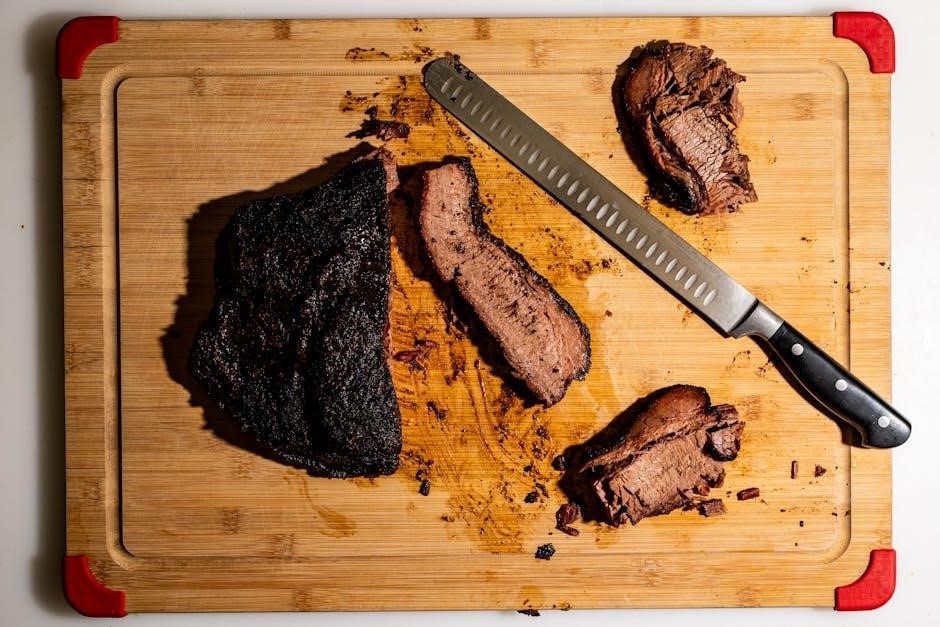
Beef cut sheets clearly delineate the key cuts derived from the short loin: the tenderloin (filet mignon) and the strip loin (New York strip steak). These cuts are characterized by their exceptional tenderness and delicate flavor. The visual guide helps identify these cuts based on their position within the primal.
Quality grading‚ often indicated on beef cut documentation‚ is particularly important for short loin cuts. Certified Angus Beef‚ as highlighted in available resources‚ emphasizes abundant marbling for superior flavor and juiciness.
These cuts are best suited for quick‚ high-heat cooking methods like grilling‚ broiling‚ or pan-searing‚ allowing their natural quality to shine.
Sirloin: Balancing Flavor and Affordability
The sirloin‚ clearly illustrated on a standard beef cut sheet PDF‚ represents an excellent balance between flavor‚ tenderness‚ and cost. Positioned behind the short loin‚ it offers a more economical option without sacrificing significant beefy taste. Beef cut sheets are crucial for identifying the various sirloin cuts available.
Common cuts from the sirloin include top sirloin steak‚ sirloin tip side steak‚ and bottom sirloin steak. These cuts‚ as depicted on the chart‚ vary in tenderness and are often used for grilling‚ broiling‚ or stir-frying. The PDF will show their relative location.
While not as inherently tender as the short loin‚ sirloin benefits from marinades and proper cooking techniques. Understanding marbling‚ as emphasized by quality grading systems like Certified Angus Beef‚ can help select sirloin cuts with enhanced flavor.
Sirloin is a versatile cut‚ suitable for both everyday meals and more special occasions‚ making it a popular choice for consumers.
Rib: Known for Richness and Tenderness
The rib section‚ prominently displayed on any comprehensive beef cut sheet PDF‚ is renowned for its exceptional marbling and resulting richness. Located behind the chuck and before the short loin‚ it’s a prime area for high-quality cuts. The PDF visually maps the location of these prized sections.
Key cuts from the rib include ribeye steak and roast‚ back ribs‚ and prime rib roast. These cuts‚ as shown on the chart‚ are highly sought after for their tenderness and flavor. The ribeye‚ both boneless and bone-in‚ is a particularly popular choice.
A beef cut sheet helps identify these cuts and understand their placement within the primal. The Certified Angus Beef brand highlights abundant marbling as a key quality standard within the rib section‚ ensuring a juicy and flavorful experience.
Due to its inherent tenderness‚ the rib section often requires minimal preparation‚ making it ideal for grilling‚ roasting‚ or pan-searing.
Round: Lean and Economical Options
The round primal cut‚ clearly illustrated on a typical beef cut sheet PDF‚ represents the rear leg of the animal. It’s known for being a lean and economical choice‚ offering excellent value for budget-conscious consumers. The PDF visually demonstrates its position‚ located behind the loin and sirloin.
Cuts derived from the round include top round steak‚ bottom round roast‚ and eye of round roast. These are often used for roasting‚ braising‚ or thinly slicing for deli meats. A beef cut sheet aids in identifying these various cuts and understanding their potential uses.
Because of its leanness‚ the round benefits from marinating or slow-cooking methods to maximize tenderness. It’s also frequently used for making Swiss steak or beef jerky. The chart helps visualize the muscle structure and grain direction.
The round is a versatile option‚ providing a healthy and affordable alternative to richer cuts‚ as detailed within the PDF resource.
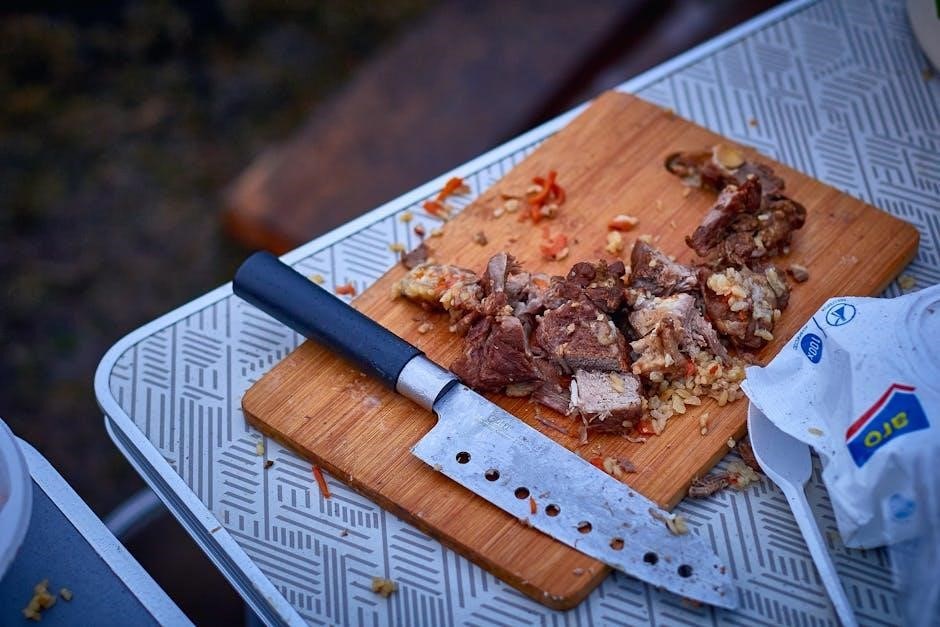
Specific Cuts & Their Placement on the Sheet
Beef cut sheet PDFs pinpoint locations of popular cuts like ribeye‚ tenderloin‚ short ribs‚ flank steak‚ and tri-tip. Visual guides clarify their position within the primal cuts.
Ribeye Steak & Roast: Identifying on the Cut Sheet
Ribeye steaks and roasts are prominently featured on beef cut sheet PDFs‚ typically within the Rib primal cut section. These charts clearly illustrate the ribeye’s location‚ often showcasing both boneless and bone-in variations.
You’ll find the ribeye positioned near the shoulder‚ easily identifiable by its generous marbling – a key indicator of flavor and tenderness. The cut sheet will differentiate between the ribeye steak (individual portion) and the ribeye roast (larger cut for multiple servings).
Retail Beef Cuts and Recommended Cooking Methods‚ funded by The Beef Checkoff‚ specifically highlights Boneless Ribeye Steak and Ribeye Roast. These sheets often include visual representations‚ making identification straightforward. Look for the characteristic eye of the ribeye muscle‚ surrounded by fat‚ on the diagram. Understanding this placement helps in selecting the right cut for your culinary needs.
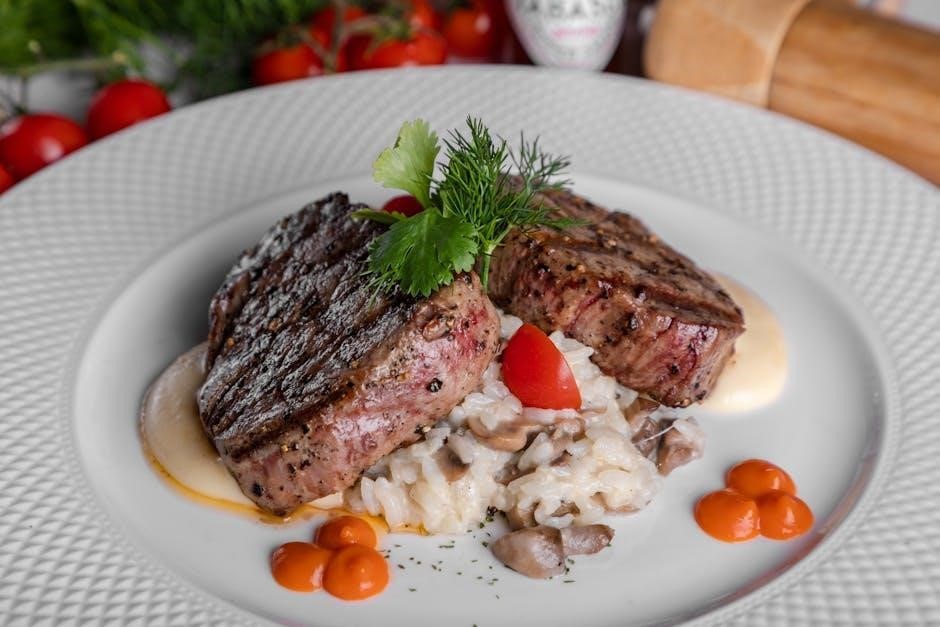
The cut sheet also aids in recognizing the different muscles within the rib primal‚ further clarifying the ribeye’s origin.
Tenderloin Steak (Filet Mignon): Location and Quality
Beef cut sheet PDFs pinpoint the Tenderloin‚ also known as Filet Mignon‚ as a premium cut originating from the loin primal. These charts visually demonstrate its location – a long‚ narrow muscle situated beneath the ribs and along the spine.
The cut sheet highlights the tenderloin’s exceptional tenderness‚ often noting its lean profile compared to more marbled cuts. It’s typically presented as a whole tenderloin or portioned into individual steaks. The PDF will often indicate the chain value of this cut.
Information sourced from various resources emphasizes the tenderloin’s high quality. The charts may not explicitly state quality grades‚ but implicitly convey its premium status through placement and description. Retail Beef Cuts and Recommended Cooking Methods identifies Tenderloin Steak as a distinct cut. Recognizing its location on the sheet allows for informed selection‚ ensuring you acquire this prized cut for a special meal.
The cut sheet’s visual guide simplifies identifying this sought-after steak.
Short Ribs: Placement Relative to Plate and Flank
Beef cut sheet PDFs illustrate the location of Short Ribs‚ clarifying their position relative to the Plate and Flank. Charts‚ like those discussed on Reddit’s r/meat‚ often show short ribs situated under the plate and to the left of the flank in a whole chart view.
These visual guides are crucial‚ as interpretations can vary – the National Beef interpretation‚ for example‚ may not always explicitly mention the plate. However‚ the PDF generally demonstrates short ribs as originating from the chuck or plate primal‚ depending on the cut.
Understanding this placement is vital for butchers and cooks. The cut sheet helps differentiate between chuck short ribs (more common) and plate short ribs (often English-cut). Recognizing their proximity to the plate and flank aids in proper trimming and preparation. The PDF serves as a quick reference for identifying this flavorful‚ yet sometimes confusing‚ cut.
Accurate placement on the sheet ensures correct identification and usage.
Flank Steak: Identifying on the Cut Sheet
Beef cut sheet PDFs are essential for pinpointing Flank Steak‚ a flavorful but often misidentified cut. These charts typically position Flank Steak within the abdominal muscles of the cow‚ stemming from the flank primal. As noted in discussions on Reddit’s r/meat‚ it’s consistently shown near the plate and short ribs.
Identifying Flank Steak requires recognizing its long‚ flat shape and prominent grain. The PDF will visually demonstrate this characteristic form. It’s crucial to differentiate it from skirt steak‚ another similar cut.
The cut sheet aids in understanding its location‚ which impacts cooking methods – marinating and slicing against the grain are key. Knowing its origin helps butchers accurately portion and consumers select the right cut for recipes. The visual guide simplifies identification‚ ensuring optimal flavor and tenderness.
Proper identification from the PDF leads to successful cooking results.
Tri-Tip Roast & Steak: Location and Cooking Methods
Beef cut sheet PDFs clearly illustrate the Tri-Tip’s location as a bottom sirloin cut‚ originating from the bottom portion of the sirloin primal. These charts visually demonstrate its triangular shape‚ hence the name. Identifying it on the sheet is simplified by its distinct form and placement.
The PDF also guides optimal cooking methods. Tri-Tip benefits from both roasting and grilling‚ often recommended for its robust flavor. It’s frequently presented as a roast‚ but also cut into steaks.
Understanding the cut sheet’s recommendations ensures tenderness. Marinating enhances flavor‚ while slicing against the grain is crucial for a palatable texture. The visual aid helps consumers and cooks alike select and prepare this versatile cut effectively.
Properly utilizing the PDF’s guidance unlocks the Tri-Tip’s full potential.

Using a Beef Cut Sheet for Cooking
Beef cut sheet PDFs are invaluable tools for cooks‚ offering guidance on cooking methods based on cut location. They also detail quality grades and
suggest cuts ideal for stew or ground beef.
Recommended Cooking Methods by Cut
Beef cut sheets‚ particularly those in PDF format‚ frequently include recommended cooking methods tailored to each cut’s characteristics. For instance‚ the Retail Beef Cuts and Recommended Cooking Methods guide‚ funded by The Beef Checkoff‚ highlights specific techniques.
Rib steaks and ribeye roasts benefit from high-heat methods like grilling or broiling‚ maximizing their inherent richness. Conversely‚ tougher cuts like those suitable for beef stew (often identified on the sheet as brisket or chuck sections G1 & G2) require low and slow cooking – braising or stewing – to achieve tenderness.
Cuts like flank steak‚ easily identified on the sheet‚ are best marinated and quickly cooked‚ while tenderloin steak (filet mignon) excels with simple preparations like pan-searing. The sheet’s visual layout helps correlate cut location with appropriate techniques‚ ensuring optimal results. Even cuts like shank cross-cut have specific recommendations.
Understanding these recommendations‚ readily available on a beef cut sheet PDF‚ empowers cooks to unlock the full potential of each cut‚ enhancing flavor and texture.
Understanding Marbling and Quality Grades
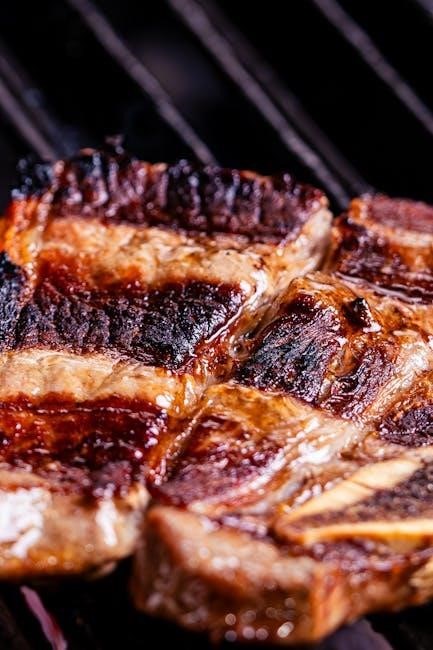
Beef cut sheets‚ often distributed as a PDF‚ don’t always explicitly detail quality grades‚ but understanding these is crucial when interpreting the sheet. The Certified Angus Beef ® brand‚ mentioned in resources alongside cut sheets‚ emphasizes quality standards‚ exceeding USDA Prime‚ Choice‚ and Select.
Marbling – the intramuscular fat – is a key indicator of quality and flavor. Abundant marbling‚ a standard for Certified Angus Beef ®‚ contributes to tenderness and juiciness. While a cut sheet shows where a cut comes from‚ quality grades‚ assessed visually‚ determine how good it is.
Higher grades (Prime‚ then Choice) generally indicate more marbling and command higher prices. A beef cut sheet PDF can help identify cuts known for good marbling‚ like ribeye‚ but doesn’t replace the need to assess the grade yourself or rely on reputable branding. Recognizing these factors elevates your beef selection.
Ultimately‚ understanding marbling and quality grades‚ alongside the cut sheet’s anatomical guide‚ leads to a more informed and satisfying culinary experience.
Finding Cuts for Stew and Ground Beef
A beef cut sheet PDF is invaluable for identifying economical cuts suitable for stewing or grinding. While the sheet visually maps primal cuts‚ understanding which are best for these purposes requires additional knowledge.
Cuts like chuck (from the shoulder)‚ round (leg)‚ and brisket are often highlighted on cut sheets and are excellent choices for slow-cooking stews due to their connective tissues‚ which break down into gelatin‚ creating a rich flavor. The sheet will show their location for easy identification.
Furthermore‚ the sheet indicates cuts like shank (cross-cut – F1 on some charts) and portions of the round (G1‚ G2) are frequently used for stew meat. For ground beef‚ the sheet doesn’t pinpoint specific areas‚ but knowing tougher cuts are often ground helps in making cost-effective choices.
Retail Beef Cuts resources confirm brisket’s suitability. Utilizing a beef cut sheet alongside this knowledge ensures you select flavorful‚ budget-friendly options for these versatile dishes.