
manual zoom h6
Zoom H6: A Comprehensive Guide
The official Zoom H6 Operation Manual‚ available in PDF and ePub formats‚ can be downloaded from the ZOOM website (www․zoom;jp/docs/h6)․
The Zoom H6 is a versatile‚ portable multi-track recorder designed for musicians‚ podcasters‚ filmmakers‚ and audio enthusiasts․ Getting started is streamlined with the readily available Operation Manual‚ downloadable as a PDF or ePub from the official ZOOM website (www․zoom․jp/docs/h6)․ This comprehensive guide‚ spanning 16 pages and 1MB in size‚ details every aspect of the H6’s functionality․
Zoom‚ a communications technology leader‚ unifies video conferencing and online meetings․ The H6 leverages this expertise‚ offering a user-friendly experience․ Whether you’re new to the platform or a seasoned pro‚ the manual provides essential instructions for optimal performance and a smooth workflow․
What is the Zoom H6 and its Primary Uses?
The Zoom H6 is a six-input multi-track recorder‚ excelling in diverse audio applications․ It’s ideal for podcasting‚ music recording‚ film production‚ and live streaming․ Zoom‚ known for its unified communication platform‚ extends this ease-of-use to the H6․ The detailed Operation Manual (available at www․zoom․jp/docs/h6) is crucial for unlocking its full potential․
This 16-page‚ 1MB PDF guide explains how to utilize the H6’s features for professional-quality audio․ From simple recordings to complex setups‚ the manual ensures users can maximize the device’s capabilities‚ mirroring Zoom’s commitment to a seamless user experience․
Unboxing and Initial Setup
Upon receiving your Zoom H6‚ refer to the comprehensive Operation Manual (www․zoom․jp/docs/h6) for a guided setup․ This 16-page PDF‚ weighing 1MB‚ details each component and initial configuration step․ Before powering on‚ familiarize yourself with the included accessories outlined within the manual․

The manual stresses the importance of downloading the latest firmware from the ZOOM website to ensure optimal performance and compatibility․ Following the manual’s instructions will guarantee a smooth unboxing experience and prepare you for utilizing the H6’s full range of features‚ mirroring Zoom’s user-friendly approach․
Components Included in the Box

The Zoom H6 Operation Manual (available at www․zoom․jp/docs/h6) meticulously lists all included components․ Expect the H6 unit itself‚ alongside a USB cable for data transfer and charging․ Crucially‚ the manual details the included microphone capsules – XYH and AB – essential for various recording scenarios․
Additional items include a windscreen to minimize wind noise‚ and a quick start guide for immediate use․ The 1MB PDF manual emphasizes verifying all components are present upon unboxing․ Zoom‚ known for its unified platform‚ ensures a complete package‚ as described within the downloadable documentation․
Charging and Powering the H6

The Zoom H6 Operation Manual (zoom․jp/docs/h6) details powering options․ Primarily‚ the H6 charges via the included USB cable‚ connecting to a computer or USB power adapter․ The manual specifies charging times and indicates a full charge provides several hours of operation․
Alternatively‚ the H6 can be powered by four AA batteries․ Zoom emphasizes using alkaline or NiMH rechargeable batteries for optimal performance‚ as outlined in the 1MB PDF․ The manual also cautions against mixing old and new batteries․ Utilizing the Zoom Workplace application enhances power management․
Navigating the H6 Interface
The Zoom H6’s interface‚ thoroughly explained in the downloadable Operation Manual (www․zoom․jp/docs/h6)‚ centers around a display screen and control knobs․ The manual details accessing the menu system‚ which allows adjustment of recording parameters‚ input settings‚ and system configurations․
Zoom emphasizes utilizing the Zoom Workplace desktop application for streamlined navigation․ The 16-page PDF guide illustrates how to efficiently move between menus and utilize the various functions․ Understanding the screen layout‚ as shown in the manual‚ is crucial for effective operation and accessing features like firmware updates․
Understanding the Control Knobs and Buttons
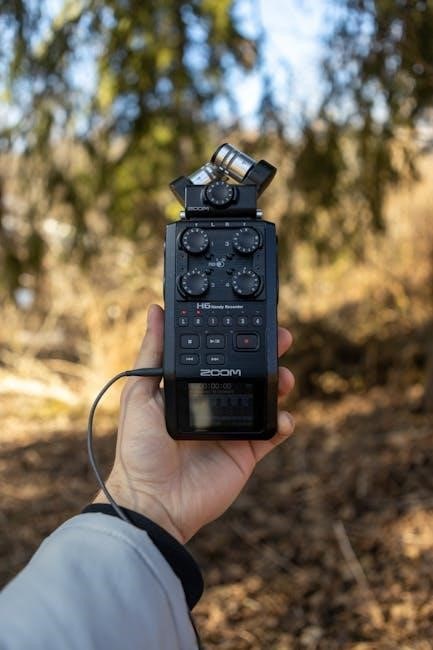
The Zoom H6’s Operation Manual (www․zoom․jp/docs/h6) provides a detailed breakdown of each control knob and button’s function․ It clarifies how to adjust recording levels‚ navigate menus‚ and select different operating modes․ The manual stresses that mastering these controls is key to unlocking the H6’s full potential․
Zoom’s guide explains how interacting with these physical controls directly impacts the audio recording process․ For new users‚ the manual recommends familiarizing themselves with the layout before attempting complex recordings‚ ensuring a smoother workflow and optimal results․
Display Screen and Menu System
The Zoom H6’s Operation Manual (available at www․zoom․jp/docs/h6) dedicates significant detail to navigating its display screen and menu system․ It explains how to interpret the various icons and settings displayed‚ crucial for efficient operation․ The manual highlights the hierarchical structure of the menus‚ allowing users to access specific functions quickly․
Understanding the menu system is presented as vital for customizing the H6 to individual recording needs․ Zoom’s documentation emphasizes that careful review of the manual will prevent confusion and maximize the device’s versatility․

Recording Basics
The Zoom H6 Operation Manual (found at www․zoom․jp/docs/h6) provides a foundational section on recording basics․ It details the initial steps for starting and stopping recordings‚ emphasizing the importance of proper setup before commencing․ The manual guides users through selecting appropriate recording modes and understanding file naming conventions․
It stresses the need to consult the manual for optimal settings based on the intended recording environment․ Zoom’s documentation aims to equip beginners with the knowledge to capture clean‚ high-quality audio from the outset‚ avoiding common pitfalls․
Setting Recording Levels

The Zoom H6 manual (available at www․zoom․jp/docs/h6) dedicates significant attention to setting optimal recording levels․ It explains the importance of achieving a strong signal without clipping‚ detailing how to utilize the input gain knobs effectively․ The manual advises monitoring levels closely via the H6’s display screen during sound checks․
Users are guided through understanding peak indicators and adjusting levels to maximize dynamic range․ Proper gain staging‚ as outlined in the manual‚ is crucial for professional-sounding recordings‚ minimizing noise and distortion․
Choosing Recording Formats (WAV‚ MP3)
The Zoom H6 manual (found at www․zoom․jp/docs/h6) thoroughly explains the differences between WAV and MP3 recording formats․ WAV is recommended for professional use‚ offering uncompressed‚ high-fidelity audio ideal for editing and archiving․ MP3 provides smaller file sizes‚ suitable for quick sharing and portability‚ but with some audio quality loss․
The manual details bit depth and sample rate options within each format‚ influencing both file size and audio resolution․ Users are guided to select the appropriate format based on their specific recording needs and intended use․
Using the Built-in Microphones
The Zoom H6 manual (available at www․zoom․jp/docs/h6) details the capabilities of its integrated microphones․ These microphones offer versatile recording options‚ including XYH and AB patterns‚ selectable directly from the device․ The manual illustrates optimal placement techniques for different recording scenarios‚ maximizing sound capture quality․
It explains how to monitor levels using the built-in microphones and adjust gain for clear recordings․ Users can leverage these microphones for interviews‚ ambient soundscapes‚ or as a convenient starting point for audio projects‚ as described within the comprehensive guide․
Microphone Patterns (XYH‚ AB‚ etc․)
The Zoom H6 manual (www․zoom․jp/docs/h6) thoroughly explains the various microphone patterns available․ XYH provides excellent mono compatibility and focused sound capture‚ ideal for interviews․ AB offers a wider stereo image‚ suitable for ambient recordings and musical performances․ The manual details how each pattern impacts sound localization and stereo width․
Understanding these patterns‚ as outlined in the guide‚ is crucial for achieving desired recording results․ It clarifies when to utilize each pattern based on the recording environment and intended application‚ ensuring optimal audio quality․
Optimizing Microphone Placement
The Zoom H6 manual (www․zoom․jp/docs/h6) emphasizes strategic microphone placement for superior recordings․ Proximity to the sound source significantly impacts signal strength and clarity; closer placement yields a stronger signal but can introduce proximity effect․ The guide details techniques for minimizing unwanted noise and reflections․
Experimentation‚ as encouraged by the manual‚ is key to finding the sweet spot․ Consider the recording environment and the desired sound characteristics when positioning microphones‚ ensuring optimal audio capture and a professional result․
External Inputs and Connectivity
The Zoom H6 manual (www․zoom․jp/docs/h6) details versatile connectivity options for expanded recording capabilities․ It supports connecting external microphones via XLR inputs‚ accommodating both condenser and dynamic types․ Line inputs facilitate integration with instruments like guitars and keyboards‚ offering diverse audio sources․
The manual clarifies proper impedance matching for optimal signal transfer․ Understanding these connections‚ as outlined in the documentation‚ unlocks the H6’s potential for professional-quality recordings and seamless integration with external audio gear․
Connecting External Microphones
The Zoom H6 manual (www․zoom․jp/docs/h6) provides detailed instructions for connecting external microphones via its XLR inputs․ It specifies compatibility with both condenser microphones‚ requiring phantom power (switchable on the H6)‚ and dynamic microphones․ The manual emphasizes proper cable connections and gain staging for optimal audio quality․
It also details how to utilize the H6’s various input configurations‚ ensuring clean and clear recordings․ Referencing the manual is crucial for avoiding signal issues and maximizing the performance of your external microphones․
Using Line Inputs for Instruments
The Zoom H6 manual (www․zoom․jp/docs/h6) explains how to connect instruments like keyboards or synthesizers using the line inputs․ It details the appropriate input levels for instruments‚ advising users to avoid clipping by carefully adjusting the gain knobs․ The manual stresses the importance of using TRS cables for balanced connections‚ minimizing noise and interference․
It also clarifies the difference between line-level and microphone-level signals‚ ensuring correct signal routing for optimal recording quality․ Consult the manual for specific instrument connection guidance․
Firmware Updates and Software
According to the Zoom H6 manual (www․zoom․jp/docs/h6)‚ keeping the device’s firmware updated is crucial for optimal performance and stability․ The manual directs users to the ZOOM website to download the latest firmware updates‚ providing clear instructions for the installation process․ It emphasizes backing up any important data before initiating an update․
Furthermore‚ the manual details integration with Zoom PodTrak software‚ enhancing workflow and offering advanced editing capabilities․ Regularly checking for updates ensures access to new features and bug fixes․
Downloading and Installing Firmware
The Zoom H6 manual (www․zoom․jp/docs/h6) explicitly states that the latest firmware files are available for download directly from the ZOOM website․ Before downloading‚ the manual advises confirming the H6’s current firmware version via the device’s menu system․
Installation involves transferring the downloaded file to an SD card‚ inserting the card into the H6‚ and initiating the update through the device’s utility menu․ The manual stresses the importance of a stable power source during the entire process to prevent interruption and potential damage․
Zoom PodTrak Software Integration
While the Zoom H6 manual doesn’t detail extensive integration with Zoom’s broader communication platform‚ it does highlight compatibility with Zoom PodTrak software for enhanced podcasting workflows․ This software facilitates remote recording capabilities‚ allowing for seamless collaboration with guests located remotely․
The manual suggests utilizing the H6 as an audio interface for Zoom PodTrak‚ enabling high-quality audio capture during online meetings and interviews․ Further details regarding specific software features and setup instructions are available on the Zoom website․
Troubleshooting Common Issues
The Zoom H6 manual addresses potential problems like audio distortion‚ often stemming from incorrect recording level settings․ It advises users to carefully monitor input levels during recording to prevent clipping and ensure optimal sound quality․ Connectivity issues are also covered‚ suggesting checking cable connections and ensuring proper device recognition by the H6․
If problems persist‚ the manual recommends consulting the official Zoom support website for frequently asked questions and further assistance․ Firmware updates‚ detailed elsewhere in the manual‚ can also resolve certain bugs․
Addressing Audio Distortion
The Zoom H6 manual identifies audio distortion as frequently linked to excessively high input levels‚ causing “clipping”․ It stresses the importance of carefully adjusting recording levels using the gain knobs‚ monitoring the input meters closely before and during recording sessions․ Lowering the input gain is the primary solution․
The manual also suggests checking microphone placement and ensuring the sound source isn’t too close to the microphones․ Furthermore‚ it advises verifying cable quality and connections‚ as faulty equipment can introduce unwanted noise and distortion․
Resolving Connectivity Problems

The Zoom H6 manual details troubleshooting steps for connectivity issues‚ primarily focusing on USB connections to computers․ It recommends ensuring the latest firmware is installed on both the H6 and the computer‚ as updates often address compatibility concerns․ Checking the USB cable itself is crucial; a damaged cable can interrupt data transfer․
The manual advises verifying the H6 is correctly recognized as an audio interface within the computer’s sound settings․ If problems persist‚ trying a different USB port or restarting both devices is suggested․ Referencing the connected device’s manual is also advised․
Resources and Further Learning
The primary resource is the official Zoom H6 manual‚ downloadable as a PDF or ePub from www․zoom․jp/docs/h6․ This comprehensive guide covers all aspects of operation‚ from initial setup to advanced features․ Beyond the manual‚ Zoom’s website offers additional support materials and frequently asked questions․
Online communities and forums dedicated to audio recording and Zoom products provide valuable peer-to-peer assistance․ Exploring these platforms can offer solutions to specific challenges and insights from experienced users․ Zoom also provides apps‚ plugins‚ and add-ons for various devices․

Official Zoom H6 Manual Download
Accessing the official Zoom H6 manual is straightforward: visit www․zoom․jp/docs/h6․ There‚ you’ll find the manual available in two convenient formats – PDF and ePub․ The PDF version‚ spanning 16 pages and 1MB in size‚ is ideal for printing and detailed offline reading․ The ePub format is suited for electronic readers and mobile devices․
This manual details everything from basic operation to advanced settings‚ ensuring users can fully utilize the H6’s capabilities․ It’s a crucial resource for both beginners and experienced audio professionals․
Online Communities and Forums
Beyond the official manual‚ a wealth of support exists within online communities and forums dedicated to the Zoom H6․ These platforms offer a space to connect with fellow users‚ share experiences‚ and troubleshoot issues collaboratively․ Users often post helpful tips‚ recording techniques‚ and solutions to common problems not explicitly covered in the documentation․

Exploring these resources can significantly enhance your understanding and unlock the full potential of your Zoom H6․ Engaging with these communities fosters learning and provides valuable peer-to-peer assistance․